
Salary Calculator
What is theAutomation Test Engineersalary in India?
Automation Test Engineer salaries in India range from ₹18 LPA to ₹60 LPA in 2026. Company type drives more of that variance than experience does. A senior automation engineer at an IT services firm earns ₹15 to 22 LPA. The same profile at a SaaS company or GCC earns ₹28 to 40 LPA. GCCs offer structured career ladders and higher base stability, with mid-to-senior profiles ranging ₹12 to 55 LPA.
What drives pay at this level:
The SDET track earns more than a standard automation role. Engineers who own framework architecture, have access to application code, participate in code reviews, and integrate testing into CI/CD pipelines earn significantly more than those running scripted test suites in isolation. Deep CI/CD experience with GitHub Actions, Jenkins, and ArgoCD is an additional pay differentiator at engineering-forward product companies.
Tool stack matters too. Playwright skills command a premium over Selenium-only profiles at product companies. Engineers combining automation with AI testing knowledge are pulling offers at the upper end of the range from fintech and healthtech companies.
Bengaluru pays 20 to 25% above the national average for automation roles. Pune is the next strongest market for automation talent depth, sitting 5 to 8% above national average. Mumbai leads specifically on financial services automation hiring, paying 15% above national average.
Where Automation Test Engineers Land in India
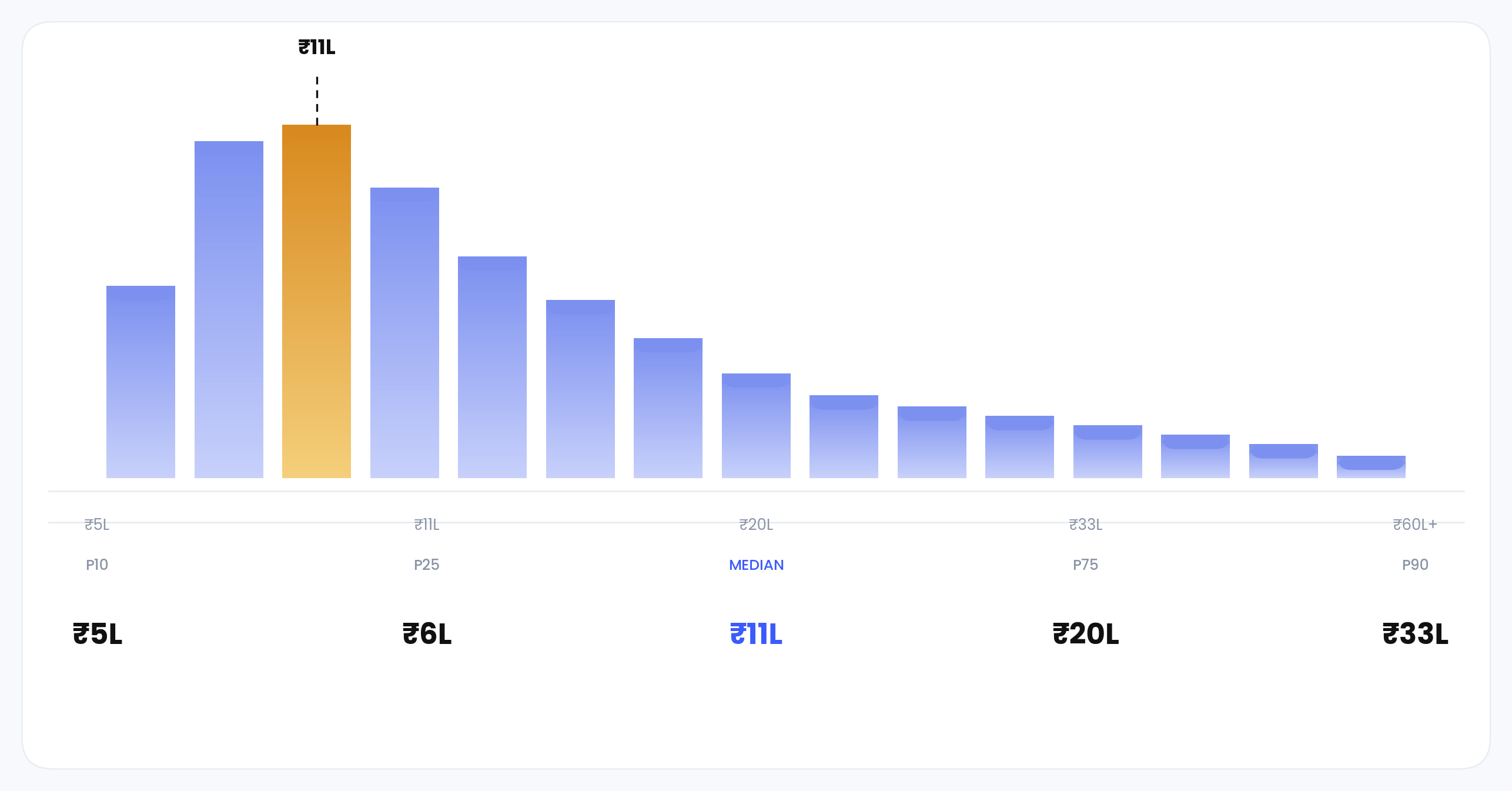
Automation Test Engineers design and build test frameworks, integrate automated suites into CI/CD pipelines, and own test infrastructure. In 2026, the Indian market ranges from ₹5 LPA at the entry level to ₹60 LPA for principal SDETs and Test Architects at top product companies.


.svg)
.svg)
How Automation Test Engineer Salary Grows With Experience
The jump from 2-5 years to 5-8 years is the steepest, because senior automation engineers are expected to architect the full test infrastructure. At 8+ years, principal SDETs and Test Architects at FAANG and top product firms reach ₹60 LPA.

Industry-wise Salary of Automation Test Engineers
SaaS and product companies pay the highest premiums because automation engineers directly control release velocity, regression confidence, and deployment frequency. All of which have a measurable business impact.
Location-wise Salary of Automation Test Engineers
Pune has one of India's densest concentrations of automation testing talent, built on its IT services history. But Bangalore leads on pay, for roles at product companies. Remote roles at global product firms align to the HQ city's salary band.

Related Roles
Similar roles you might consider

What Affects Pay
What influences anAutomation Test Engineersalary
Six factors explain most of the variance inAutomation Test Engineer in India. Mix matters more thanany single one.

Years of Experience
Entry-level automation engineers average ₹5 LPA. At 2-5 years, compensation moves to ₹12 LPA on average as engineers independently own test suites. Senior engineers (5-8 years) average ₹22 LPA, and lead-level profiles (8+ years) average ₹30 LPA.

Framework Ownership vs Script Execution
A Playwright or Cypress framework architect at a product company in the 3-5 year range can command ₹18-25 LPA, while a script-writing role at the same experience level typically tops out at ₹10-14 LPA.

Company Type
At IT services firms, senior automation engineers typically earn ₹15-22 LPA; the equivalent profile at a SaaS company or GCC earns ₹28-40 LPA. The gap reflects how directly automation quality affects product reliability and release cadence.

Geographic Location
Bangalore pays 20-25% above the national average for automation roles. Pune is the next strongest market given its automation talent depth, sitting 5-8% above the national average. Mumbai leads on financial services automation hiring and pays 15% above the national average.

Tool Stack and CI/CD Depth
Deep CI/CD integration experience with GitHub Actions, Jenkins, and ArgoCD is an additional differentiator. That pushes compensation further, particularly at engineering-forward product companies.

SDET Positioning
Automation engineers who operate as SDETs with access to application code, involvement in code reviews, and responsibility for both test tooling and test strategy earn 30-50% more. At the 5-8 year mark, an SDET at a product company can earn ₹32-45 LPA.
Frequently Asked Questions
A QA Engineer's scope often includes manual testing, test planning, and defect tracking alongside automation. An Automation Test Engineer focuses specifically on building, scaling, and maintaining automated test infrastructure. The specialisation typically commands 25-40% higher pay at equivalent experience levels.
Selenium remains a near-universal baseline expectation at interviews but is no longer a pay differentiator on its own. For new entrants, learning Playwright alongside API automation is a more direct path to the top salary quartile.
At 5 years with strong framework experience and CI/CD skills, most automation engineers earn ₹20-32 LPA. Those in SDET roles at product companies or GCCs sit at the higher end of that band. IT services professionals at the same tenure typically earn ₹14-20 LPA.
GCCs tend to offer structured career ladders, higher base pay stability, and international exposure, typically ₹12-55 LPA for mid-to-senior profiles. Indian product companies often offer faster growth, higher equity upside, and broader ownership. Total compensation at high-growth unicorns can match or exceed GCC offers once equity vesting is factored in.
At startups, ESOPs vest over 4 years with a standard 1-year cliff. Equity becomes a meaningful pay component from the 5-year mark, particularly at Series B+ companies and unicorns. Annual vesting at this stage can add ₹5-20 LPA in effective compensation on top of a base of ₹22-35 LPA.
