
Salary Calculator
What is theFull Stack Engineersalary in India?
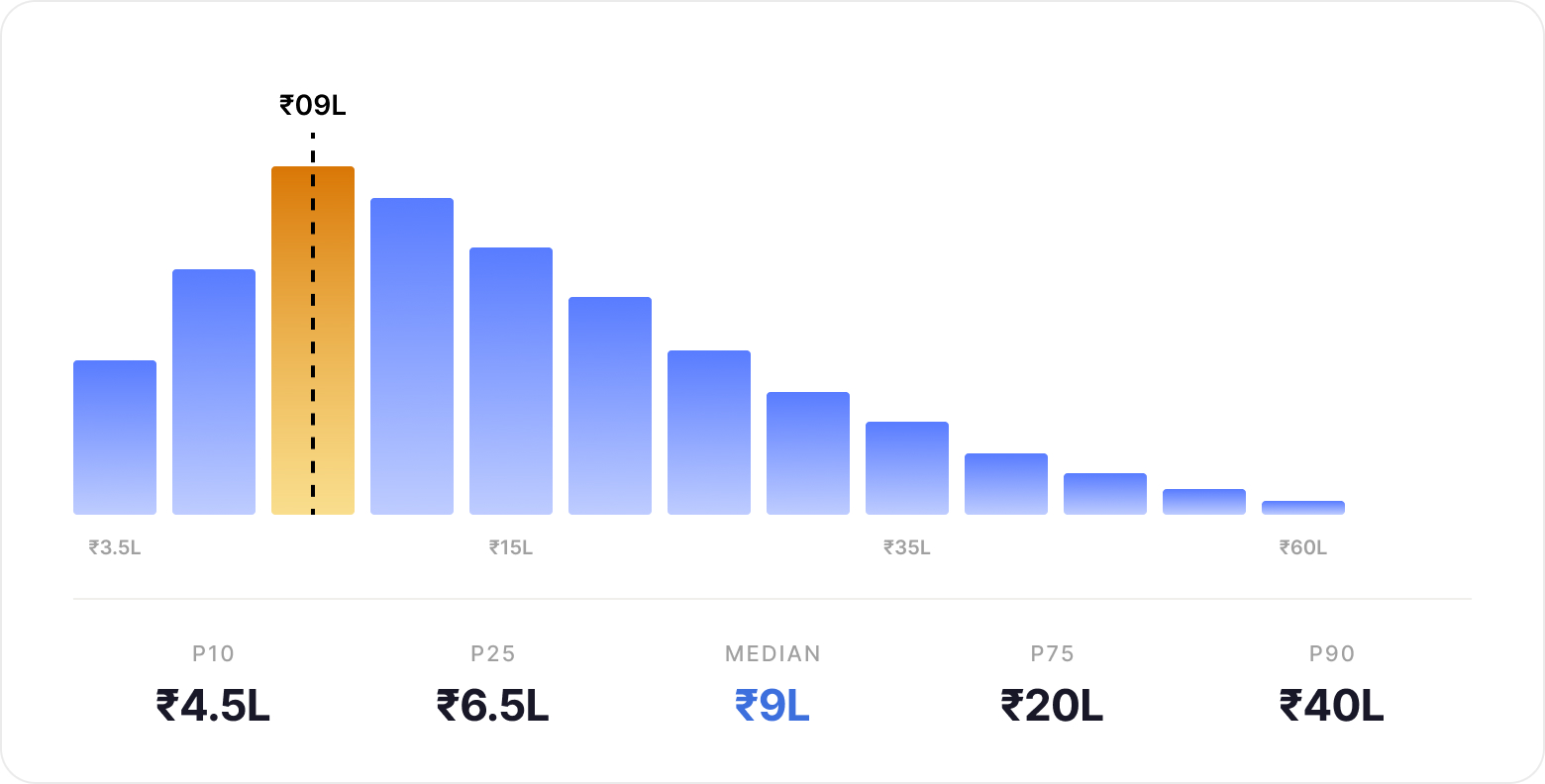
Salary range: ₹9 LPA to ₹60 LPA
Full Stack Engineer salaries in India range from ₹9 LPA to ₹60 LPA in 2026, across 2 to 8 or more years of experience. Breadth gets you hired. Depth is what gets you paid more.
Quick salary snapshot
- Entry to early career (0-2 years): ₹5 to 10 LPA
- Mid-level (2-5 years): most actively hired band for full stack roles
- Senior (5-8 years): ₹25 to 45 LPA at product companies and GCCs
- Lead and above: up to ₹60 LPA at top product firms
What moves the number
- Engineers who can ship full stack features using Next.js, tRPC, or GraphQL earn 20 to 30% more than pure frontend or backend specialists at the same experience level
- Company type creates the biggest gap. Early-stage startups value full stack engineers the most because one engineer can own an entire feature end to end. Product companies and funded startups pay significantly more than IT services firms
- AI integration is becoming a real premium. Full stack engineers who can build LLM-integrated features alongside standard frontend and backend work are getting better offers in 2026
- Depth within a stack matters more than knowing many stacks. Engineers who know React and Node deeply earn more than those with surface familiarity across five frameworks
Full stack vs specialist
Full stack roles are most valuable at startups and early-stage companies where versatility and speed matter more than specialisation. At larger product companies and GCCs, deep specialists tend to earn more at senior levels. The full stack advantage is strongest in the 2 to 5 year band.
City
Bengaluru leads on pay. Hyderabad and Pune follow. Remote roles at global product firms pay to the HQ city's band regardless of the engineer's location.
Where Full-stack Engineer Land in India
Full Stack Engineers build and maintain both frontend and backend systems. Salary varies based on experience, company type, tech stack, and location. In 2026, Full Stack Engineer salaries in India range from ₹3.5 LPA at entry level to ₹60 LPA or more at senior levels in product companies.


.svg)
.svg)
How Full-stack Engineer Salary Grow With Experience
The jump from entry-level to mid-level is steep. Average pay more than doubles between the 0-2 and 2-5 year bands. Engineers who cross the 8-year mark and join product-first companies can reach ₹60 LPA at the top 10th percentile. Stack specialisation and product company exposure accelerate this progression significantly.

Industry-wise Salary of Full-stack Engineer
Fintech leads because engineers handle high-stakes financial systems requiring strong security, compliance, and real-time data processing expertise.
Location-wise Salary of Full-stack Engineers
Your city directly shapes your Full Stack Engineer salary in India. Bangalore pays the most, while Tier-2 cities lag significantly. Remote roles pay well but follow the hiring company's location-based salary band. Bangalore-headquartered companies typically offer the strongest remote packages.

Related Roles
Similar roles you might consider

What Affects Pay
What influences anFull Stack Engineersalary
Six factors explain most of the variance inFull Stack Engineer in India. Mix matters more thanany single one.

Years of Relevant Experience
Experience directly determines pay band. The 2-5 year range is especially significant as engineers move from junior to independent contributor roles.

Company Type
Product companies and FAANG-equivalent firms pay 40-70% more than IT services firms for the same experience level in full-stack roles.

City and Location
Bangalore and Hyderabad pay 12-25% more than the national average due to high concentrations of product companies and strong demand for skilled engineers.

Tech Stack and Framework
Engineers proficient in React, Node.js, Go, or cloud-native tools command significantly higher salaries than those working with legacy technologies. Java Full Stack (Spring Boot + React) pays the highest at MNCs and BFSI-sector tech companies, where legacy Java infrastructure is being modernised. For startup roles, MERN stack has the most openings and competitive salaries.

AI/Cloud integration premium
A Full Stack Developer with AI or Cloud exposure commands 30-50% higher pay than traditional web developers in 2026, and full stack developers building AI-integrated products may reach ₹30-40 LPA within 5 years.

Equity Component
At FAANG and unicorn companies, ESOPs and RSUs add meaningful value on top of base salary. Senior full stack engineers at top product firms reach ₹50–60 LPA largely through equity, not base alone.
Frequently Asked Questions
Java Full Stack with Spring Boot and React commands the highest pay at MNCs and BFSI companies. While the MERN stack dominates startup hiring. Adding AI or cloud integration can push salaries 30–50% above the standard full-stack range.
Product and FAANG-equivalent companies pay 40–70% more than IT services firms for the same experience level and role. The gap is most pronounced at the mid-to-senior band where IT services ceilings end.
The biggest leap happens between the 0-2 and 2-5 year bands, where average pay more than doubles from ₹6.5 LPA to ₹8–15 LPA. Engineers who pair this transition with a move to a product company or stack upgrade accelerate the jump further.
Yes, engineers building AI-integrated products or gaining cloud-native experience are hitting that range within 5 years at top product firms. Stack specialisation combined with a product company shift is the fastest path to crossing that threshold.
Remote roles typically follow the hiring company's HQ city salary band, meaning a Bangalore-headquartered firm usually pays Bangalore-equivalent compensation regardless of where you sit. Targeting global product companies with India engineering hubs is the most reliable way to access top-tier remote packages.
