
Salary Calculator
What is theProduct Managersalary in India?
Product Manager Salary in India 2026
Salary range: ₹32 LPA to ₹250 LPA
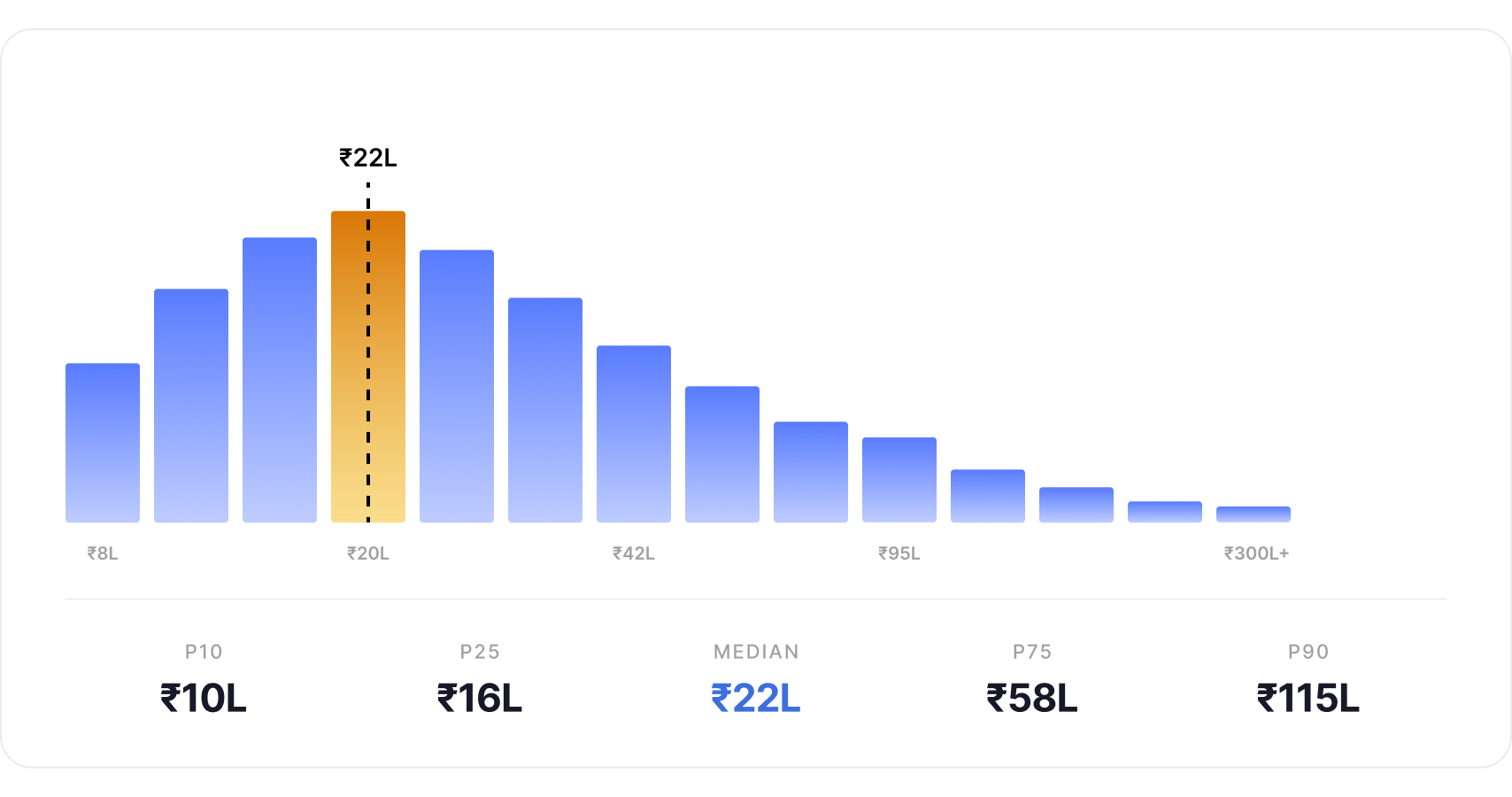
Product Manager salaries in India range from ₹8 LPA for entry-level APMs to ₹300 LPA or more for VP of Product and CPO roles at FAANG and top-tier unicorns in 2026. The IC to Staff to Director progression is the single biggest salary driver in this career.
Quick salary snapshot
- Entry-level APM: ₹8 to 15 LPA
- Mid-level IC PM (2-5 years): ₹20 to 35 LPA
- Senior PM (5-8 years): ₹40 to 80 LPA at product companies
- Staff and Group PM: ₹80 to 150 LPA at FAANG and top unicorns
- Director and above: ₹150 to 300 LPA+ total compensation
What moves the number
- Level is the biggest driver. Directors earn 3 to 6x more than entry-level PMs at the same company
- FAANG and well-funded unicorns pay 2 to 4x more than IT services firms. Fintech, AI/ML, and B2B SaaS specialists command an additional 15 to 25% over generalist PMs
- At senior levels, equity-heavy startups can match or exceed large-company cash compensation. Equity is where most of the gap lives above ₹80 LPA
- An MBA from IIM, ISB, or XLRI unlocks significantly higher entry packages, especially at companies with structured APM programmes
City
Bengaluru and Hyderabad offer 15 to 25% higher PM salaries than Pune or Chennai. FAANG office presence in these cities directly raises local compensation benchmarks. Remote PM roles follow the hiring company's HQ city pay band, not the candidate's location.
Where do Product Manager Lands in India
Product Managers define product vision, prioritize features, and align teams to drive business outcomes. Salary varies by seniority, company type, and product scale. In 2026, total compensation in India ranges from ₹8 LPA for entry-level APMs to ₹300+ LPA for VP of Product and CPO roles at FAANG and top-tier unicorns.


.svg)
.svg)
PM Experience-wise Salary
Candidates who move into Staff or Group PM roles at FAANG-tier companies drive this ceiling upward significantly. Director and Principal PM compensation at the 8+ year stage varies the most.

PM Industry-wise Salary
Fintech, SaaS, and e-commerce pay significantly above IT services roles. SaaS and product-native companies command the highest premiums because their entire revenue model depends on product execution. Product Managers directly own outcomes that drive growth, retention, and monetisation. That direct accountability justifies the pay gap over service-oriented firms
Location-wise PM Salary
Your city significantly affects Product Manager compensation across IC, Staff, and Director levels in India. Remote roles typically follow the salary band of the company's headquarters location. Bangalore-headquartered firms often pay higher remote rates than the national average.

Related Roles
Similar roles you might consider

What Affects Pay
What influences anProduct Managersalary
Six factors explain most of the variance inProduct Manager in India. Mix matters more thanany single one.

Seniority Level and Career Track
IC PM, Staff PM, and Director represent the largest salary differentiator. Directors earn 3-6x more than entry-level PMs at equivalent companies.

Company Type
FAANG and well-funded unicorns pay 2-4x more than IT services firms. At senior levels, equity-heavy startups can match or exceed large-company cash compensation.

Location Tier
Bangalore and Hyderabad offer 15-25% higher PM salaries than Pune or Chennai. FAANG office presence in these cities directly raises local compensation benchmarks.

Domain Expertise
Fintech, AI/ML, and B2B SaaS specialists command 15-25% premiums over generalist PMs. Specialized knowledge barriers and measurable business impact drive this gap.

Education Credentials
An MBA from a top-tier institute (IIM, ISB, XLRI) can unlock significantly higher entry packages. Though strong PMs from engineering or non-MBA backgrounds are increasingly common at product-first companies.

Equity Component
ESOPs are a standard part of the PM package at funded startups and unicorns, often worth ₹10–30 LPA in notional value and potentially life-changing at pre-IPO stage companies.
Frequently Asked Questions
The average Product Manager salary across all levels and company types is approximately ₹20–25 LPA. At product and FAANG-equivalent companies, mid-to-senior PMs typically earn ₹40–90 LPA.
Director, GPM, and VP of Product roles at FAANG companies or top unicorns can reach 300-1,200 LPA total compensation, including ESOPs and performance bonuses.
Entry-level Associate PMs at IT services firms start at 8-12 LPA. APM programs at product companies offer 15-25 LPA.
Google, Microsoft, Amazon, Meta, and Atlassian pay the most. Indian unicorns like Razorpay, PhonePe, Meesho, and CRED also offer highly competitive PM packages.
Remote PM roles typically follow the hiring company's HQ city pay band. Bangalore-headquartered firms pay Bangalore-equivalent salaries regardless of employee location.
Product Managers define product strategy, prioritize backlogs, collaborate with engineering and design, analyze user data, and drive feature delivery to achieve business outcomes.
