
Salary Calculator
What is theFrontend Engineersalary in India?
Salary range: ₹16 LPA to ₹90 LPA
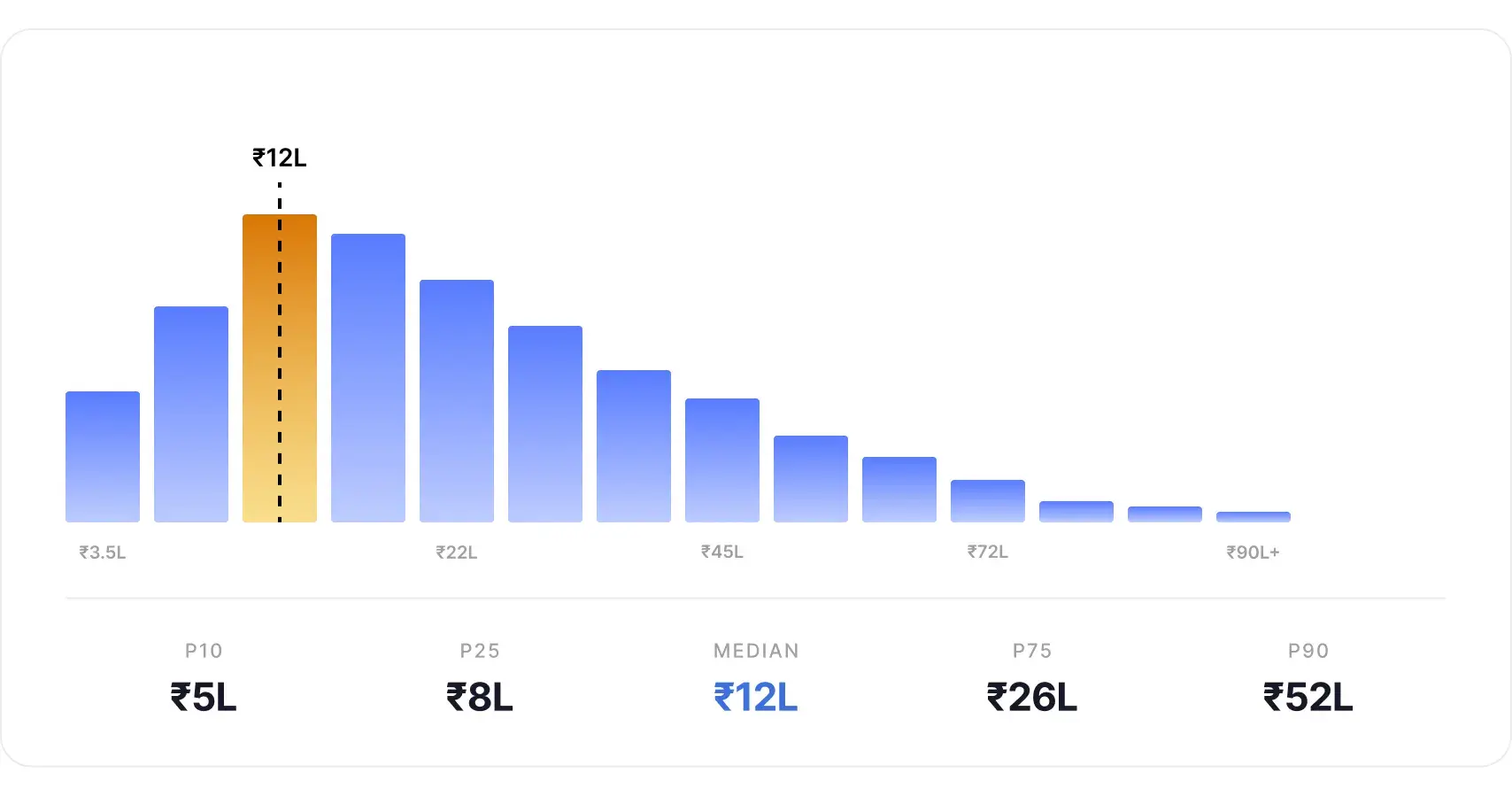
Frontend Engineer salaries in India range from ₹3.5 LPA at entry level in IT services to ₹90 LPA for principal engineers at GCCs and top product firms in 2026. The steepest salary jump happens between 0 to 2 years and 2 to 5 years, where average pay more than doubles.
Quick salary snapshot
- Fresher at IT services: ₹3.5 to 6 LPA
- Fresher at product company or GCC: ₹5 to 10 LPA
- Mid-level (2-5 years): most actively churned cohort, job-switch jumps average 30 to 45%
- Senior lead (8-12 years): ₹50 to 90 LPA at Google, Microsoft, and Amazon India (largely through RSU vesting)
What moves the number
- React developers earn 10 to 15% more than Angular or Vue developers due to higher market demand, but the bigger premium comes from depth: Next.js, server components, SSR, and TypeScript
- Consumer internet, SaaS, and fintech pay the highest frontend premiums because UI quality directly affects retention, conversion, and revenue
- Company type creates a wide gap. Product companies and GCCs pay significantly more than IT services for equivalent experience
- RSUs and ESOPs become significant from the 5-year mark at funded startups. Staff and principal engineers reach ₹50 to 90 LPA mostly through equity, not base salary alone
One thing to watch
Mid-level frontend engineers (2-5 years) are the most actively switched cohort in the Indian market. If you're in this band and haven't switched in two or more years, you're likely leaving 30 to 45% on the table.
City
Bengaluru leads on pay. Hyderabad and Pune follow. Remote roles at global product firms pay to the hiring company's HQ band regardless of the engineer's city.
Frontend Developer Salary Range in India 2026 Breakdown
Frontend Engineers build user-facing interfaces using React, Next.js, TypeScript, and modern CSS frameworks. In 2026, the Indian market ranges from ₹3.5 LPA at the entry level in IT services to ₹90 LPA for principal frontend engineers at GCCs and top product firms.


.svg)
.svg)
Frontend Developer Salary by Experience Level in India
The steepest salary jump occurs between the 0-2 and 2-5 year bands average pay more than doubles. Mid-level frontend engineers (2-5 years) are the most actively churned cohort in the Indian frontend market, with job-switch jumps averaging 30-45%. Senior frontend leads (8-12 years) have deep design-system experience.

Which Industries Pay Frontend Engineers the Most in India?
Consumer-internet product companies and SaaS firms pay the highest frontend premiums because UI quality directly drives user retention, conversion, and revenue. E-commerce and fintech also pay above market due to the high visibility and performance demands of their frontend surfaces.
Frontend Developer Salary by City | Bangalore vs Hyderabad vs Pune
Bengaluru leads with the highest concentration of consumer-internet product companies and design-system roles. Hyderabad is close behind, driven by large GCC frontend teams at Microsoft, Amazon, and Google. Remote frontend roles for global employers typically pay at Bengaluru benchmarks regardless of where the developer lives.

Related Roles
Similar roles you might consider

What Affects Pay
What influences anFrontend Engineersalary
Six factors explain most of the variance inFrontend Engineer in India. Mix matters more thanany single one.

Years of Experience
Experience drives the largest salary jumps. Steep gains occur at the 2-year and 5-year marks. Averages: ₹5 LPA at entry, ₹12-14 LPA at 2-5 years, ₹25-35 LPA at 5-8 years, and ₹45+ LPA at 8+ years in product companies and GCCs.

Company Type
Product companies and GCCs pay 40-60% more than IT services firms for equivalent experience. At FAANG India offices, the gap widens to 3-5x. Services firms cap pay due to hourly billing models; product companies tie compensation to user-facing impact.

Location
Bangalore pays 15-20% above the national frontend average. Pune and Delhi NCR sit 10-15% below Bangalore. Remote roles for global employers neutralize the location gap entirely, paying at Bengaluru benchmarks regardless of the developer's city.

Framework & Stack Depth
React developers earn 10-15% more due to higher demand. Engineers with Next.js + SSR expertise, design-system ownership, or React Native cross-platform skills earn 20-30% above pure frontend generalists at the same level.

Design System & UI Architecture
Engineers who own design systems used across multiple product surfaces are treated as infrastructure-critical, not just UI implementers. This distinction drives a meaningful premium at the senior and staff levels, often the difference between ₹35 LPA and ₹55+ LPA.

Equity Component
At GCCs and funded startups (Series B+), RSUs and ESOPs become significant from the 5-year mark. Staff and principal frontend engineers at Google, Microsoft, or Amazon India reach ₹50-90 LPA largely through equity vesting, not base salary growth alone.
Frequently Asked Questions
Freshers at IT services firms earn ₹3.5-6 LPA. Product companies and GCCs offer ₹5-10 LPA for the same experience. Candidates from top engineering colleges start at ₹8-10 LPA. Knowing only HTML/CSS/JavaScript without a modern framework limits entry-level offers.
Yes, React developers typically earn 10-15% more due to higher market demand. However, the bigger premium comes from depth within the ecosystem. Next.js, server components, SSR, and TypeScript proficiency matter more than the base framework choice.
Yes, but only at the staff/principal level (12+ years) at GCCs like Google, Microsoft, or Amazon, and primarily through RSU vesting. Base salaries for frontend roles rarely cross ₹50-55 LPA. These roles require ownership of UI infrastructure or design systems at scale, not just feature delivery.
Frontend engineering is a distinct, highly-paid specialization in 2026; the era of frontend meaning "HTML and jQuery" is long gone. That said, engineers who can ship full-stack features using Next.js + tRPC/GraphQL often earn 20-30% above pure frontend specialists.
Next.js and SSR expertise, design-system ownership, web performance engineering, accessibility (WCAG/ARIA), and React Native cross-platform skills produce the largest pay bumps. TypeScript is now table stakes; it no longer adds a premium on its own.
